Masked Cowards, Mob Justice: Inside the Antifa Assault Trials in Hungary
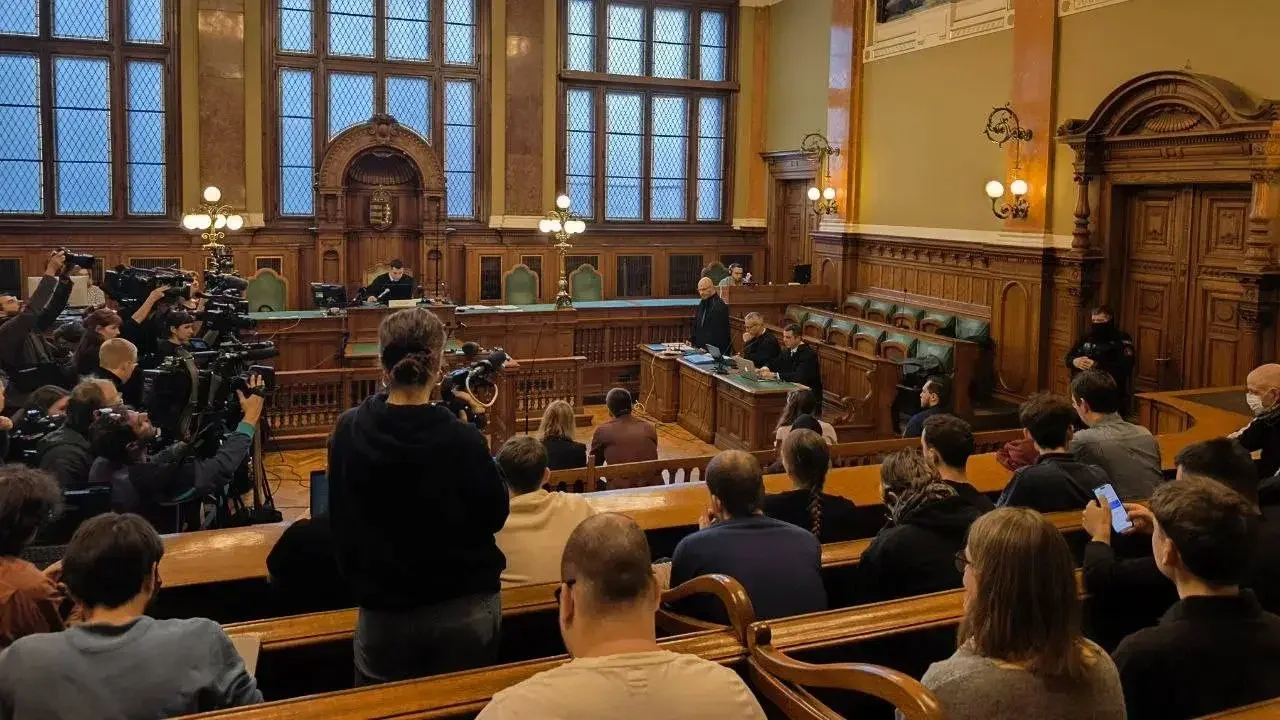 Photo: Tamás Lipták/Magyar Jelen
A Budapest courtroom handed down verdicts on February 4, 2026, for brutal street attacks carried out three years earlier. Simeon Ravi Trux, an extreme left-wing Antifa German terrorist who uses the name Maja T., received an eight-year prison sentence. Gabriele Marchesi got seven years. Anna Christina Mehwald received two years, suspended, with a five-year probation period. His criminal accomplices were handed lighter sentences.
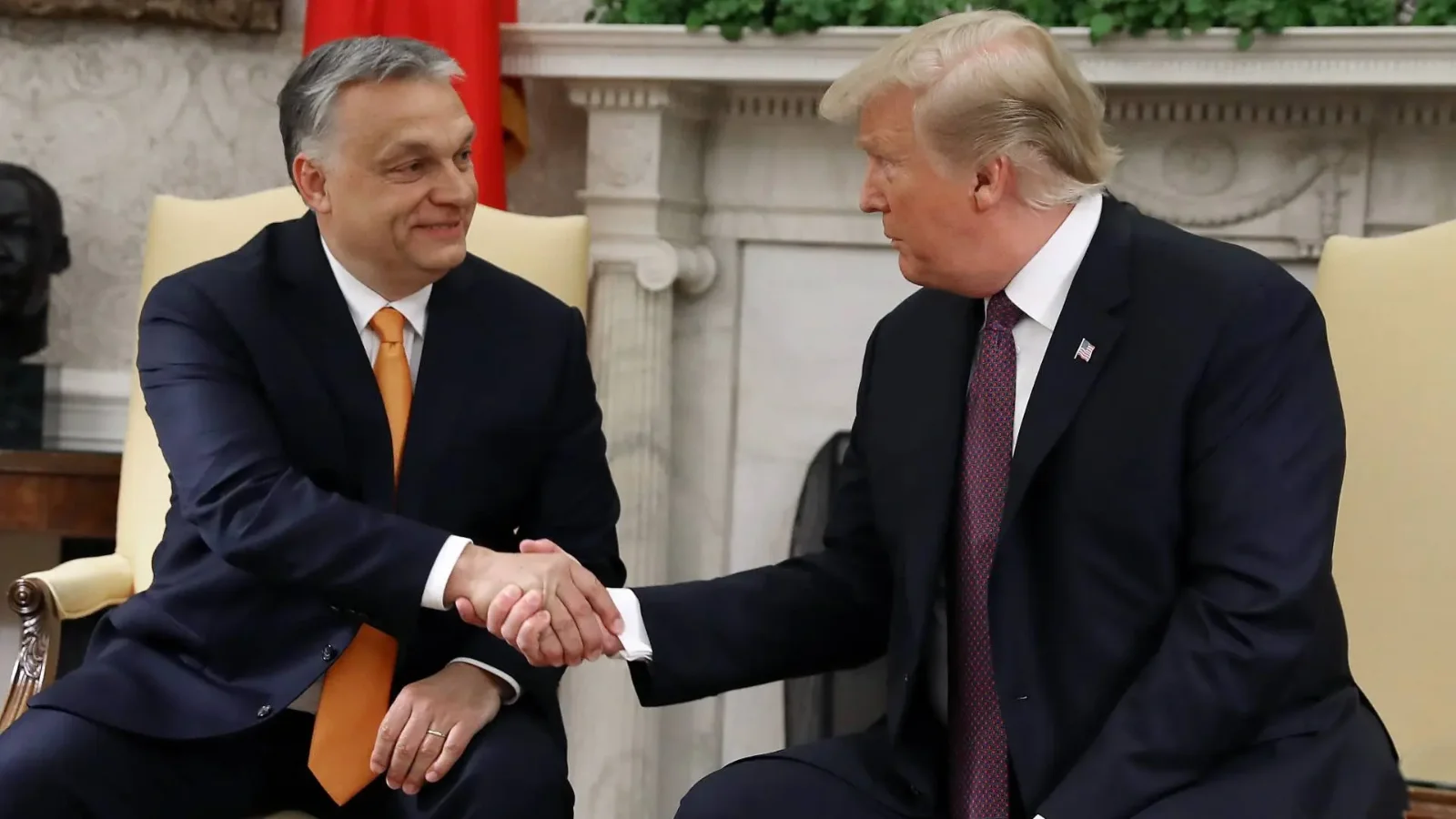
Critics called the penalties far too lenient. Hungary designated Antifa as a terrorist organization in September 2025, yet despite this, prosecutors charged Trux only with participation in a criminal organization, even though terrorism charges were available. They didn’t. That decision severely limited sentencing outcomes. Victims still live with the consequences of organized extremist violence. Viktor Orbán’s so-called conservative government talks tough on antifa but prosecutes with restraint, shielding itself behind jurisprudence, leaving Hungarian citizens failed both at home and abroad.
Trux is also linked to a clothing store attack in Erfurt, Germany, where an employee was beaten to death. The methods mirrored the Budapest assaults. Taken together, these cases reveal a pattern of serial extremist violence, not activism. Trux evaded authorities for months, moving between cities while authorities closed in. Police finally arrested him in a Berlin hotel lobby. He knew exactly what he had done.
Masked attackers struck Budapest between February 9 and 11, 2023. They hunted down people they labeled as right-wing extremists. Nine people were assaulted in coordinated strikes across the Hungarian capital. Four sustained serious injuries, while five suffered lighter wounds. The attacks were timed to coincide with the Day of Honor, the second largest right-wing gathering in Europe, a date chosen for maximum symbolic effect. The event takes place every February 11 to mark the 1945 breakout attempt by German and Hungarian forces during the siege of Budapest.
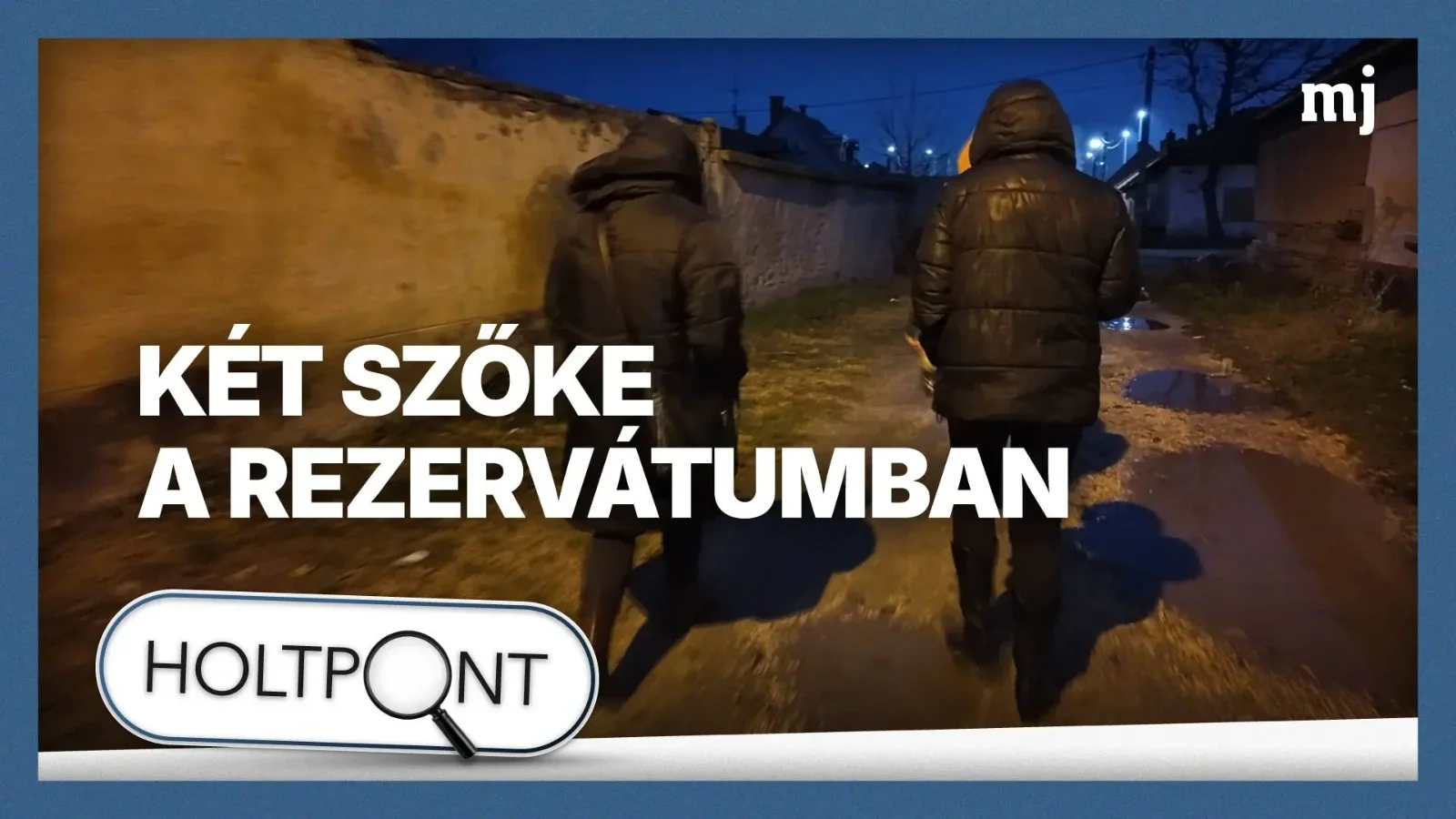
Attackers dressed in black and wore masks. They stalked targets through public transit, sometimes across multiple train transfers, tracking movements with patience and intent. Groups of seven or eight ambushed victims from behind.
They used telescopic batons, metal rods, and pepper spray. Hungarian authorities initially claimed the attackers selected victims randomly based on clothing and appearance. This provided the defendants with legal cover. Later evidence showed the targeting was deliberate and ideological.
Three Polish citizens were surrounded at Fővám Square along the Danube waterfront on February 9. The beating lasted about one minute. Two victims were hospitalized with bone fractures. That same morning, another man was pepper-sprayed at Budapest Nyugati station. The worst attack came the next day. László Dudog, a patriotic rock musician, was assaulted in the Gazdagrét district. Video footage shows attackers delivering blows that caused a concussion and facial bone fractures. He required more than eight days of medical care. That evening, assailants followed a Hungarian couple from a concert venue in the 11th district to Bank Street, waiting until the street emptied. They attacked both. The man suffered a concussion and multiple facial fractures. The woman sustained injuries that risked bone damage. Years later, these victims still live with the damage, their daily lives permanently altered.
Police arrested the initial suspects on February 11, 2023. Officers recovered three telescopic batons, a rubber hammer, and a lead-padded glove, weapons medical experts said could cause life-threatening injuries. The attacks were not spontaneous. Prosecutors proved this, showing that the defendants belonged to a violent organization formed in Leipzig in 2017. Members held training sessions and communicated via Darknet channels, operating as a disciplined cell rather than a loose collective. They planned operations down to the smallest details, assigning each member a specific role and rehearsing 30-second assault windows, a system built for speed, coordination, and escape.
Judge József Sós pointed to video evidence, and there was plenty of it. Public security camera footage tracked masked figures following victims over extended periods, sometimes across multiple locations, capturing coordinated movements that left little room for doubt about intent. The recordings show assaults that continued even after victims fell defenseless. Defense attorneys claimed the video recordings were “completely inadmissible as evidence,” a claim that collapsed under even casual scrutiny. Anyone who watched the footage knew better. Despite the scale of the violence, prosecutors avoided terrorism charges, and the court denied every victim compensation claim, leaving perpetrators with reduced charges and victims with nothing.
Ilaria Salis, charged in connection with the Budapest assaults, never faced trial. Police arrested the extremist Italian Antifa operative on February 11, 2023, and she spent fifteen months in custody, after which Italian extremist networks framed her as a victim, promoted her candidacy, and ultimately propelled her into the European Parliament in 2024. That narrative unraveled when police found a telescopic baton in her possession during a second search. She claimed authorities had planted the weapon, a narrative leftist media eagerly amplified, elevating allegation over evidence. Hungary asked the European Parliament to lift her immunity, but it was rejected by a single vote. Brussels shielded a violent criminal who attacked citizens of a member state, turning institutional procedure into political protection.
At that moment, the people beaten on Budapest’s streets were already back home recovering from fractured bones and concussions, their lives permanently altered while their attackers gained platforms and protection.
Germany’s Federal Constitutional Court ruled Trux’s extradition unlawful, saying Hungary couldn’t guarantee humane treatment. Berlin sent him anyway, moving quickly once the decision was issued. A helicopter flew Trux to Hungary in June 2024. Italy and France refused similar extradition requests for the other Antifa terror suspects. German authorities warned of potential nationwide unrest after the verdict, and a Federal Criminal Police Office memo spoke of retaliatory crimes and possible assaults on Hungarian diplomatic facilities. That sounded less like analysis and more like a veiled threat aimed at protecting extremists, suggesting German institutions were managing optics rather than confronting violence.
This is the operating pattern: Antifa militants commit violence, ideological networks mobilize narratives, and European institutions convert street assault into political reward. Antifascism now operates as political immunity.
Mainstream media followed the same script. Mérce described victims as “people perceived as far-right extremists,” wording that suggested violence might be acceptable if targets actually were right-wing. Coverage fixated on Trux’s detention and Salis’s claims while minimizing shattered bones and hospitalizations, completing the inversion in which perpetrators became victims and victims became acceptable targets. The prosecution became “Orbán’s revenge campaign against every European antifascist force” instead of accountability for organized extreme left-wing cross-border violence. Left-liberal media turned perpetrators into victims and actual victims into acceptable targets. Mérce called the prosecution a “witch hunt” against left-wing organizations, arguing Hungary was trying to stigmatize antifascism itself. In their view, prosecuting people who beat others with metal rods amounted to an ideological attack.
Trux put on a show throughout the trial. He spoke at length, often in the third person, about being a “small flower” and a “fragile plant,” claiming persecution for antifascist beliefs and non-binary identity, performing vulnerability while ignoring the damage left behind.
He complained about solitary confinement and launched a 40-day hunger strike in 2025. He played the victim. Meanwhile, the Hungarians he helped hospitalize live with permanent injuries and received no compensation. Throughout the proceedings, Trux never once acknowledged the victims or the violent acts prosecutors detailed.
Trux’s father, Wolfram Jarosch, ran a coordinated campaign with Hungarian extremist Marxist activist Attila Vajnai. They appeared together at Budapest press conferences, calling the prosecution an attack on antifascist ideology, attempting to recast criminal proceedings as political persecution. When Vajnai wrote on social media that victims were deliberately targeted based on political views, that admission collapsed their claim of defensive action.
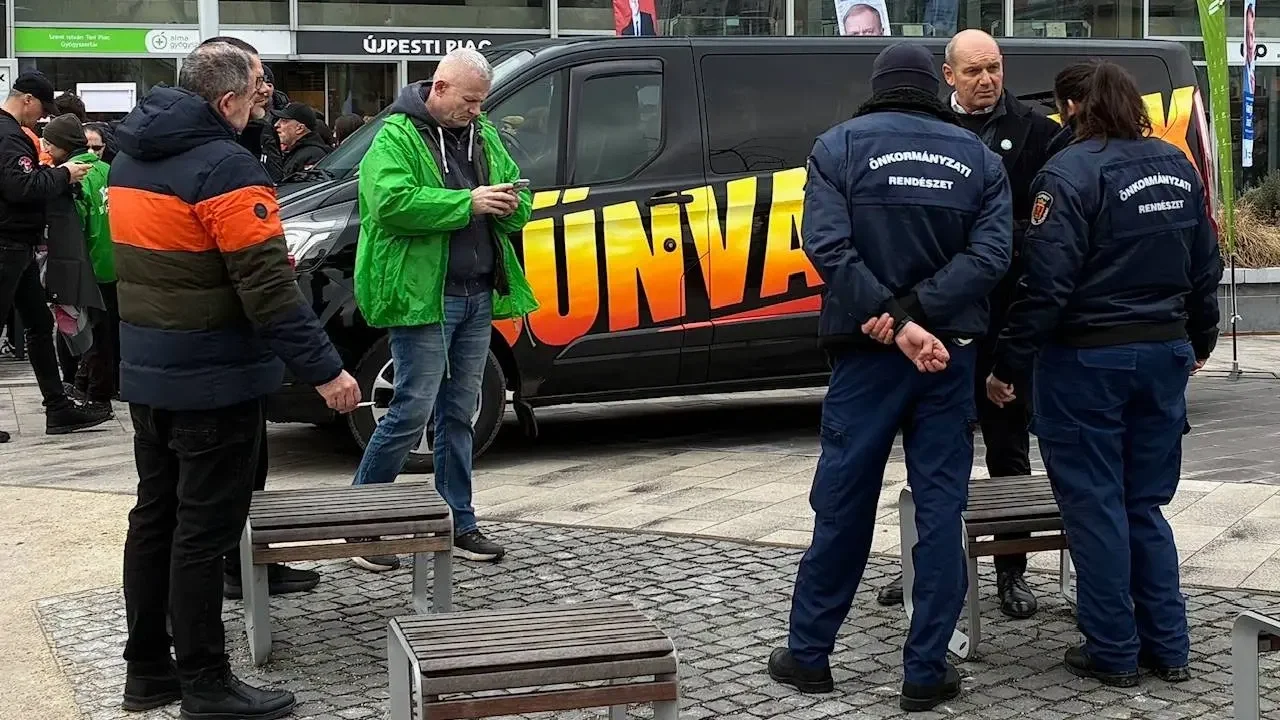
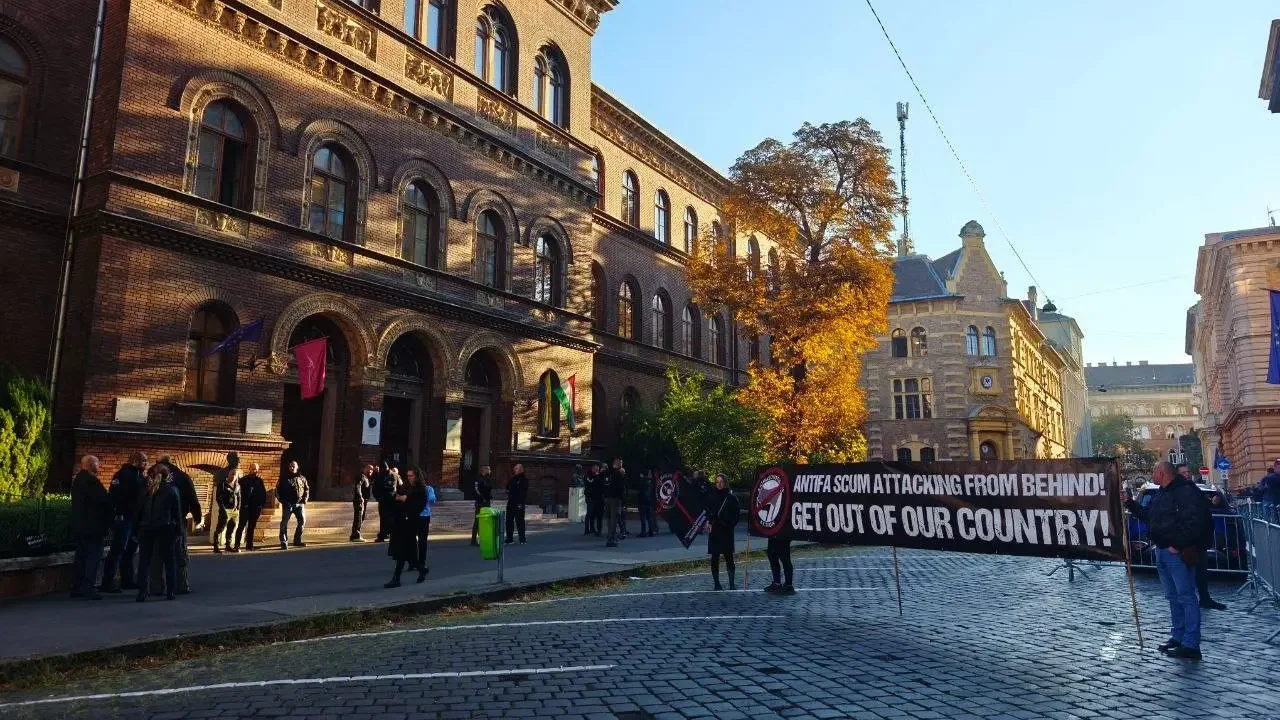
Police blocked antifa demonstrations outside the courthouse after the September 2025 terrorist designation. Yet many of the same activists still made their way into Hungary and into the courtroom, raising questions about how porous those restrictions really were. Hungarian nationalist groups held counterdemonstrations, and the Sixty-Four Counties Youth Movement showed up as well. The government sends mixed messages. It declares antifa a terrorist organization, then allows their supporters to demonstrate at trials, blurring enforcement lines in plain sight.
German left-wing MEP Martin Schirdewan called the case political persecution. The Left in the European Parliament went further. This official group of elected MEPs, where Salis sits, put out a statement on verdict day, declaring that “anti-fascism is not terrorism, it is a democratic duty.” They never mentioned the nine victims who were beaten and hospitalized. They called the prosecution “repression” and claimed that “far-right” governments “criminalize those who oppose authoritarianism.” An official EU political faction had just endorsed political violence, doing so openly and without qualification. Not media spin. Not activist rhetoric. An actual European Parliament group. Hungarian State Secretary Zoltán Kovács welcomed the verdict, calling them “antifa terrorists.” Both sides can appeal, but three more defendants remain beyond Hungary’s reach.
Victims suffered fractured bones and concussions on Budapest’s streets in February 2023. Eight years for organized terrorist violence falls short of justice. Antifa struck Budapest again in early February 2025, right around the anniversary, a reminder that the threat did not end with the verdicts. They’re still out there.
This is what protection of Antifa looks like in practice.
It ends with fractured bones on Budapest sidewalks, attackers elevated to political symbols, and institutions calling it democracy.
Beat people in the name of antifascism and you’ll receive light sentences from Hungarian courts. You’ll find protection from the European establishment. The Left just made this official. They call beating Hungarians with metal rods a “democratic duty,” while real victims carry lifelong injuries and attackers walk free.
Sources:
Mérce
Magyar Jelen (Tamás Lipták)


Mi a munkánkkal háláljuk meg a megtisztelő figyelmüket és támogatásukat. A Magyarjelen.hu (Magyar Jelen) sem a kormánytól, sem a balliberális, nyíltan globalista ellenzéktől nem függ, ezért mindkét oldalról őszintén tud írni, hírt közölni, oknyomozni, igazságot feltárni.
Támogatás