Thousands March in Kálló After Hungary's Supreme Court Overrules Police Ban
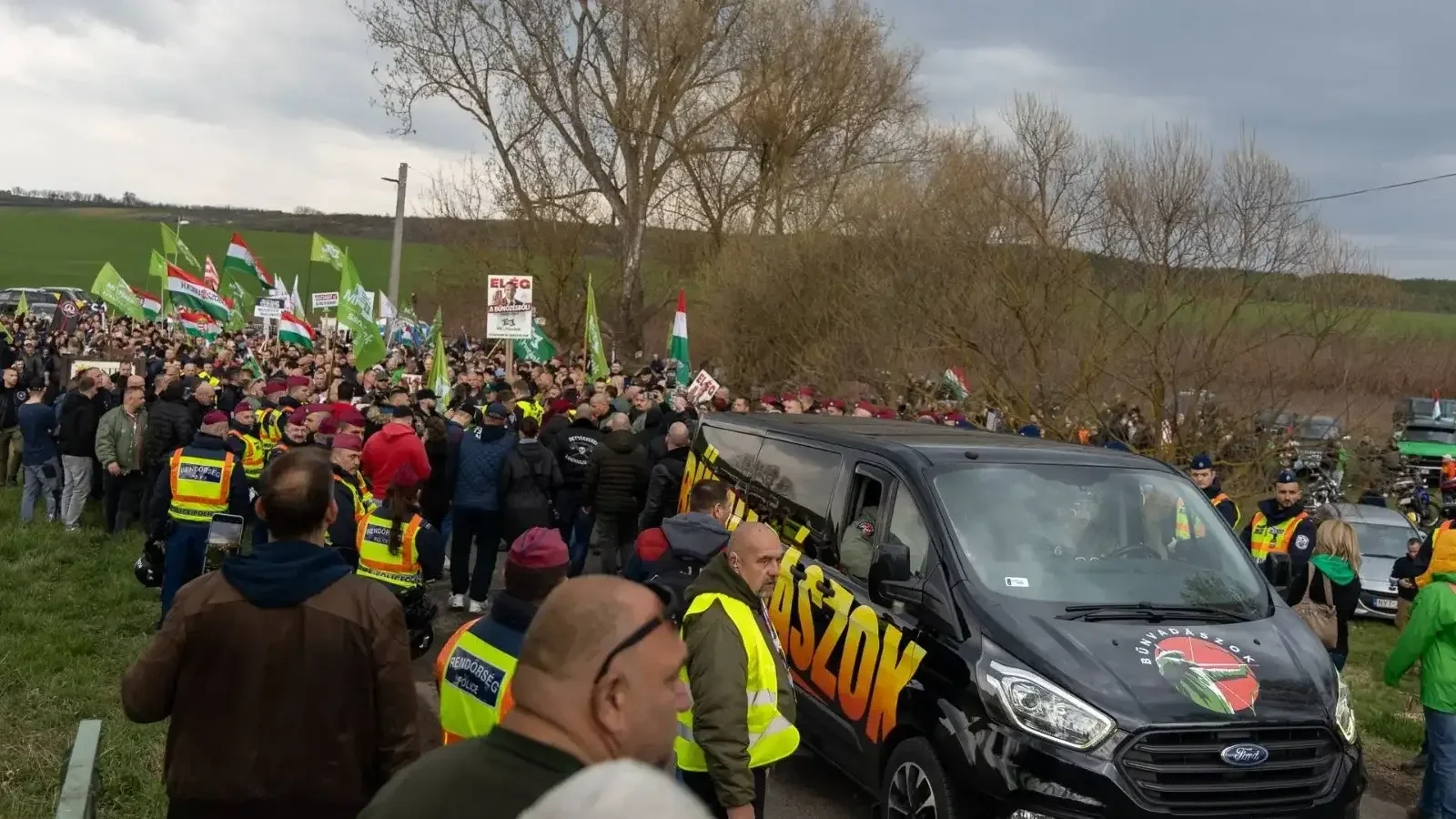 Photo: Magyar Jelen
Summary and translation of reporting by Erdei Veronika, the Hungarian news portal Magyar Jelen, March 28, 2026.
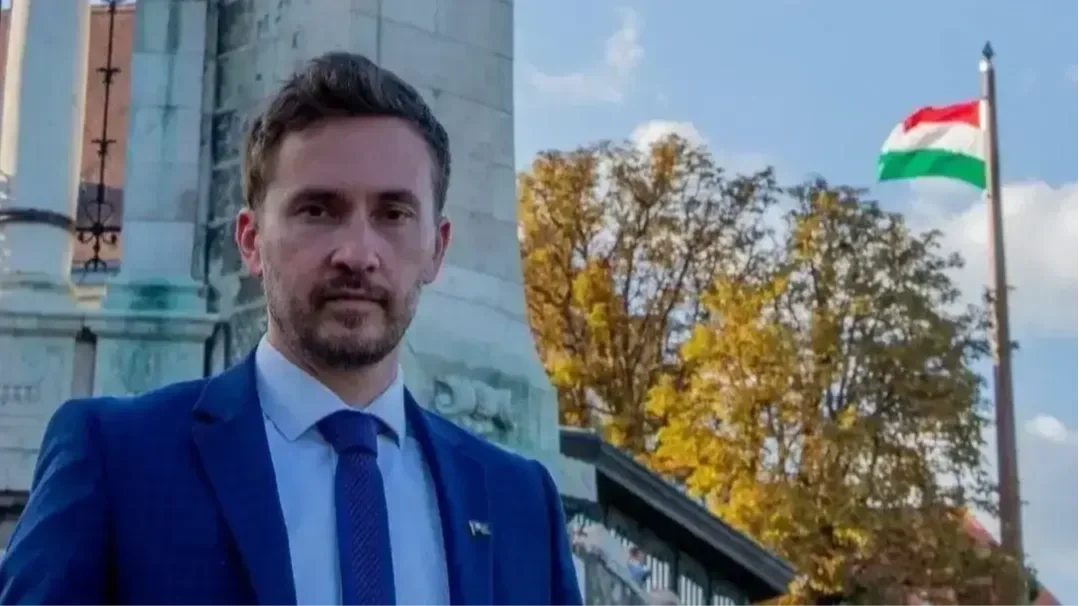
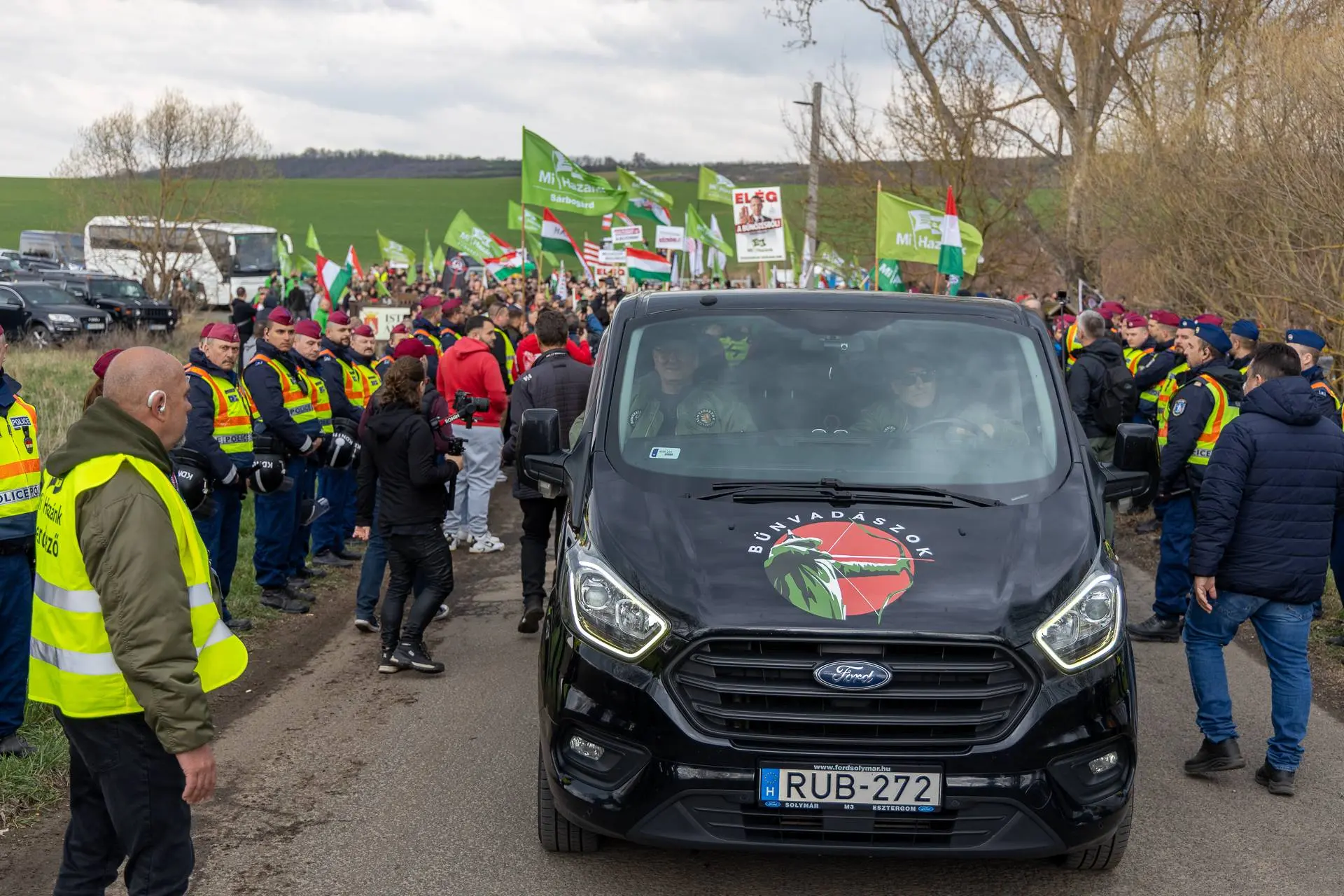
Several thousand people lined up behind a campaign bus in the village of 1,600 and marched to the mayor's office on March 28, two weeks before Hungary's parliamentary elections. They had come from across the country to Kálló, in Nógrád County, where a campaign forum two weeks earlier had nearly ended in a lynching. Mi Hazánk Mozgalom (Our Homeland Movement) called the march to protest what residents describe as a no-go zone in rural Hungary.
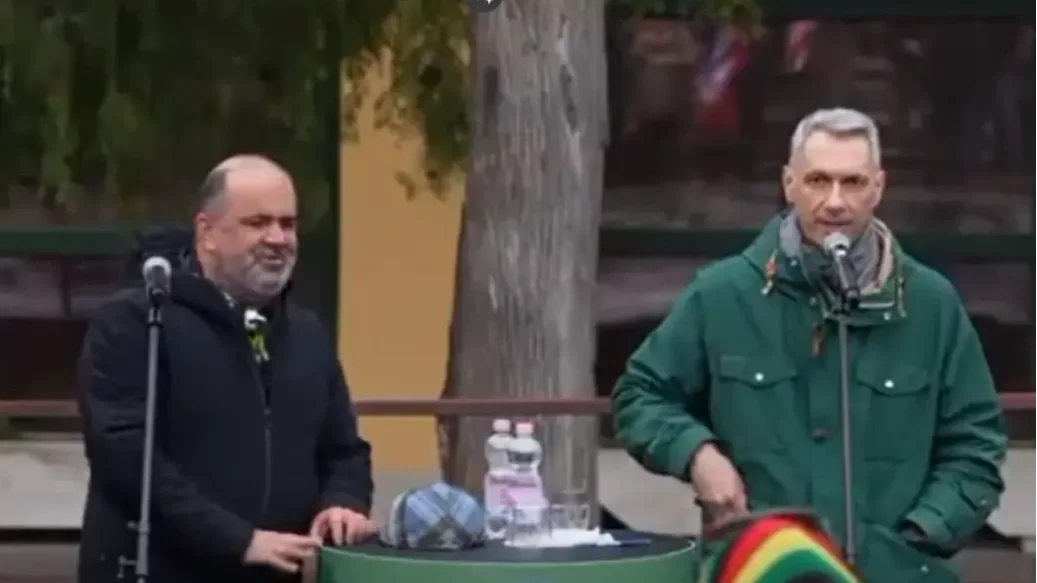
On March 14, the party's bus pulled into Kálló at 9 a.m. on a workday. Three people were on board. Zoltán Kemenár, a Pest County Mi Hazánk assembly member, stepped out first. Mi Hazánk vice chairman Dávid Dócs arrived shortly afterward and found sixty to seventy people already gathered.
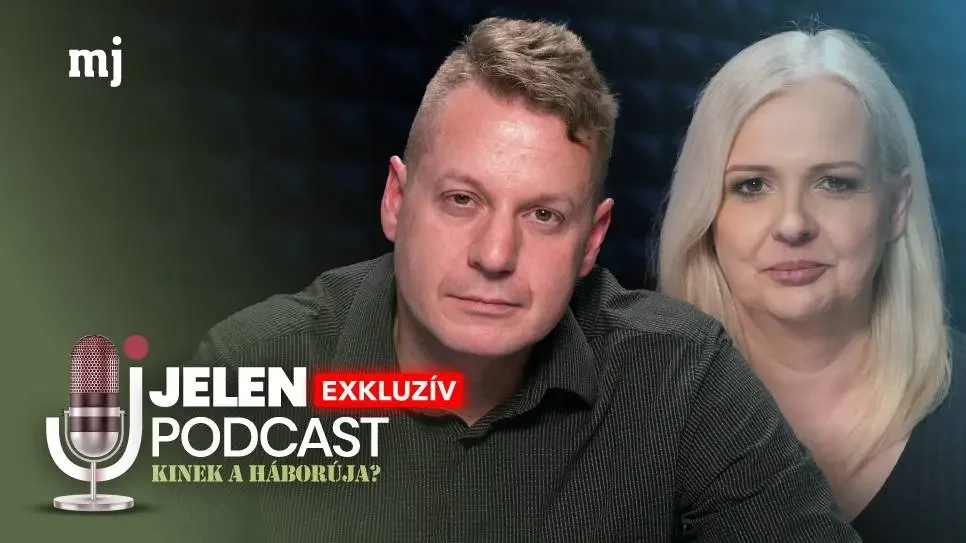
Moments later, six to eight individuals rushed them, cursing, shoving, and threatening violence. As Dócs later recounted on a Magyar Jelen podcast, the scene took on what he described as “lynch atmosphere.” Two local officers arrived within five minutes. Reinforcements took another twenty. Several people in the crowd had openly identified themselves as career criminals on social media.
In connection with the incident, the podcast host referenced Lajos Szögi, lynched in 2006 in front of his children, as an example of how such situations can escalate. Dócs added that Vince Száva, a self-described Gypsy rights advocate, had arrived shortly beforehand and, in his view, incited the crowd.
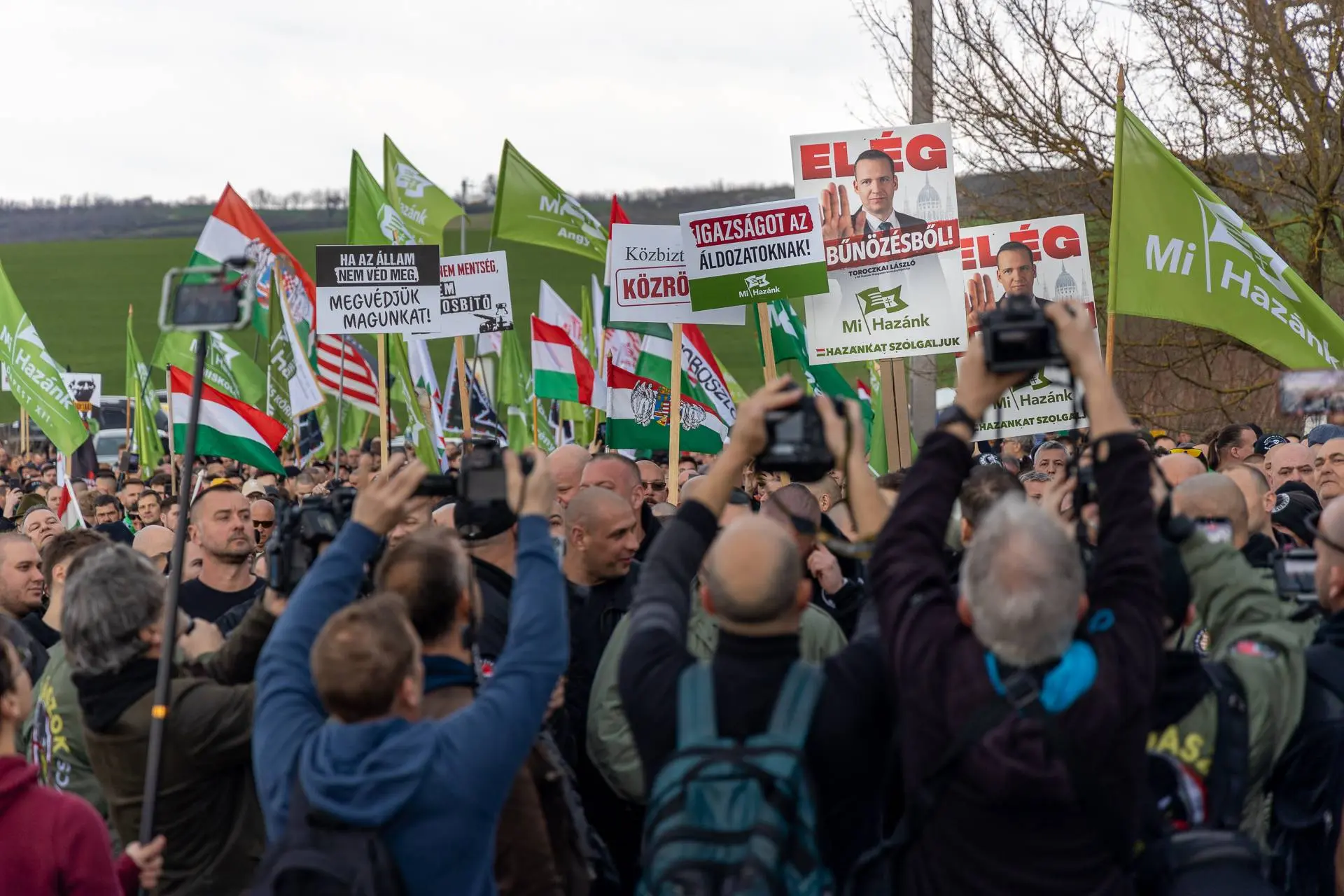
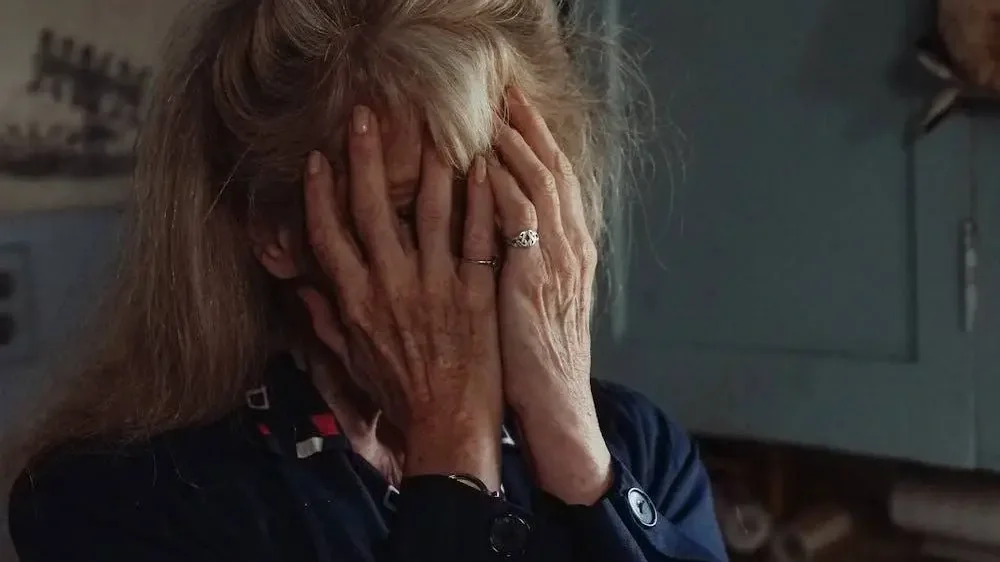
The conditions that made Kálló dangerous were not new. Residents described parents who no longer allowed their children to walk the few hundred meters from school to home, an elderly woman who stayed inside while window frames were stolen in broad daylight, and a family whose firewood was taken by men who drove a van through their gate at night. A woman distributing Mi Hazánk leaflets in several settlements refused to enter Kálló. Her life, she said, was worth more. Across Jász-Nagykun-Szolnok, Nógrád, and Somogy counties, the party reported hearing the same complaints about drugs, terrorized settlements, and police who never arrive.
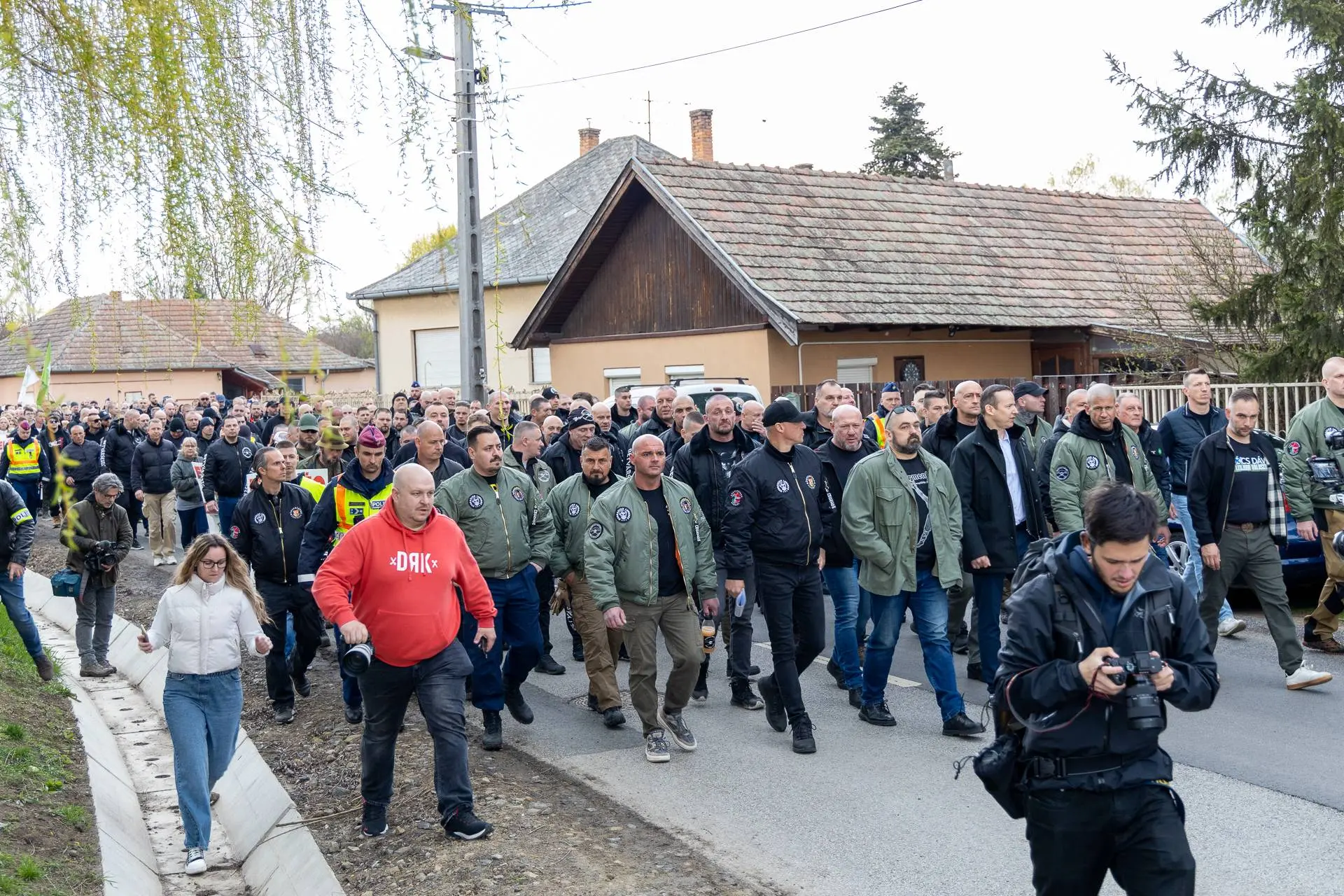
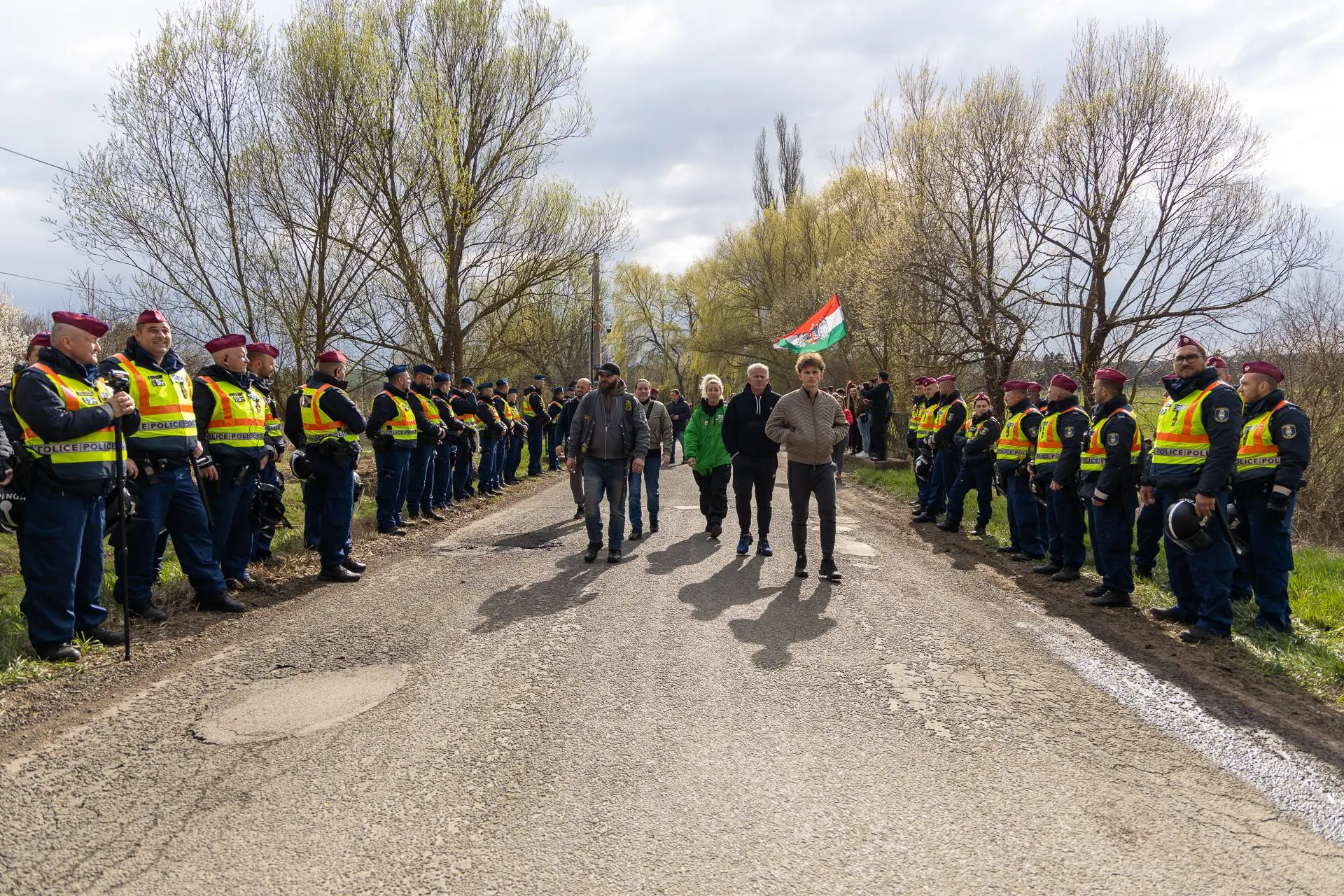
Despite all this, police refused to authorize the planned march. Mi Hazánk appealed to the Kúria, Hungary's highest court, which overturned the ban.
Previously, Dócs had introduced a Slovenian-style law to eliminate no-go zones. However, Lajos Kósa, an MP from the governing Fidesz party, dismissed it in committee, saying such zones do not exist in Hungary.
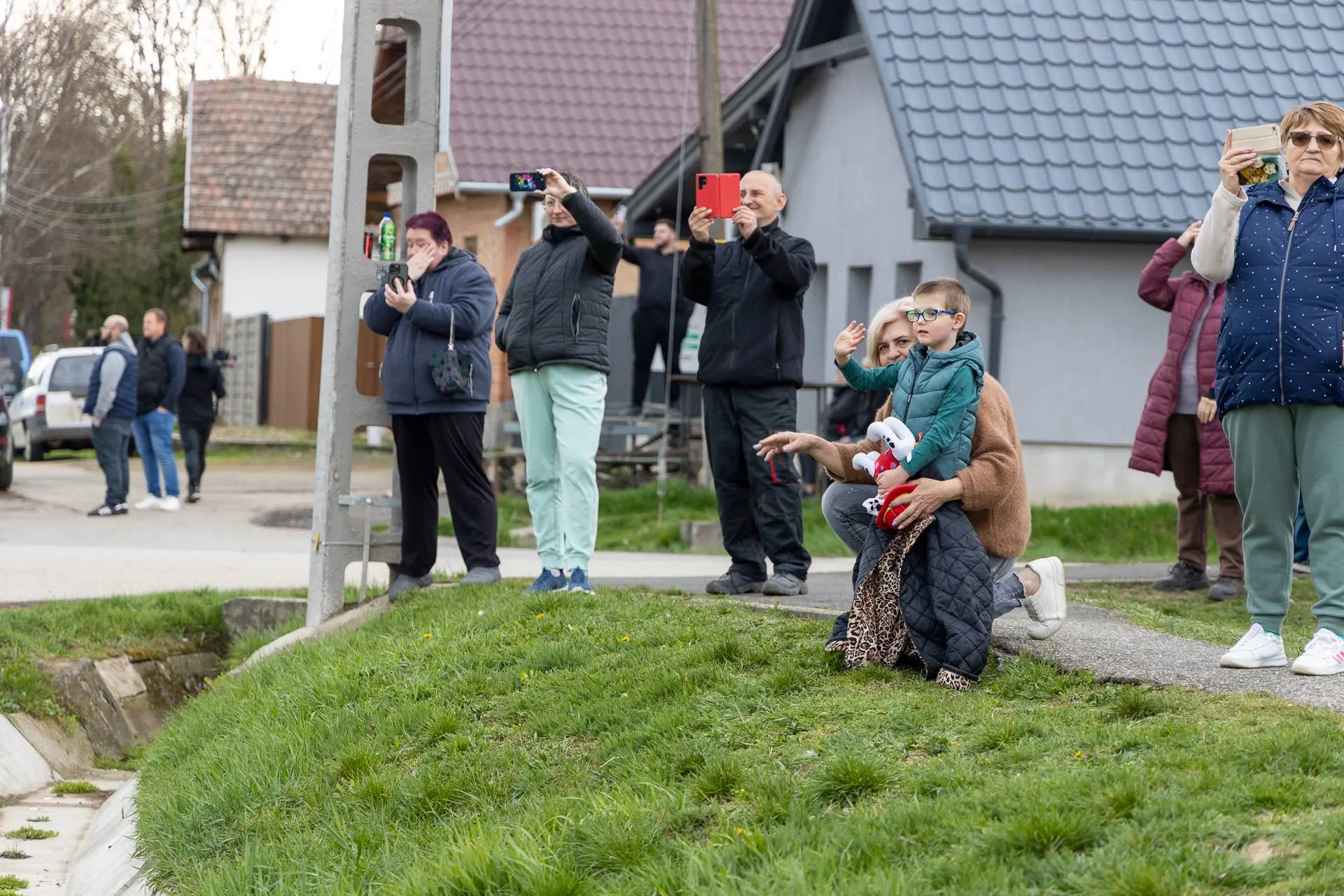
On March 28, officers searched vehicles at the perimeter but found nothing. The marchers moved in silence behind the Bűnvadászok (Crime Hunters) bus. The Bűnvadászok are a popular party-affiliated patrol with 372,000 YouTube subscribers that goes wherever it is called in response to reported crime. Residents came out to wave as the march passed. On a side street, Száva's counterdemonstrators numbered only twenty to thirty.
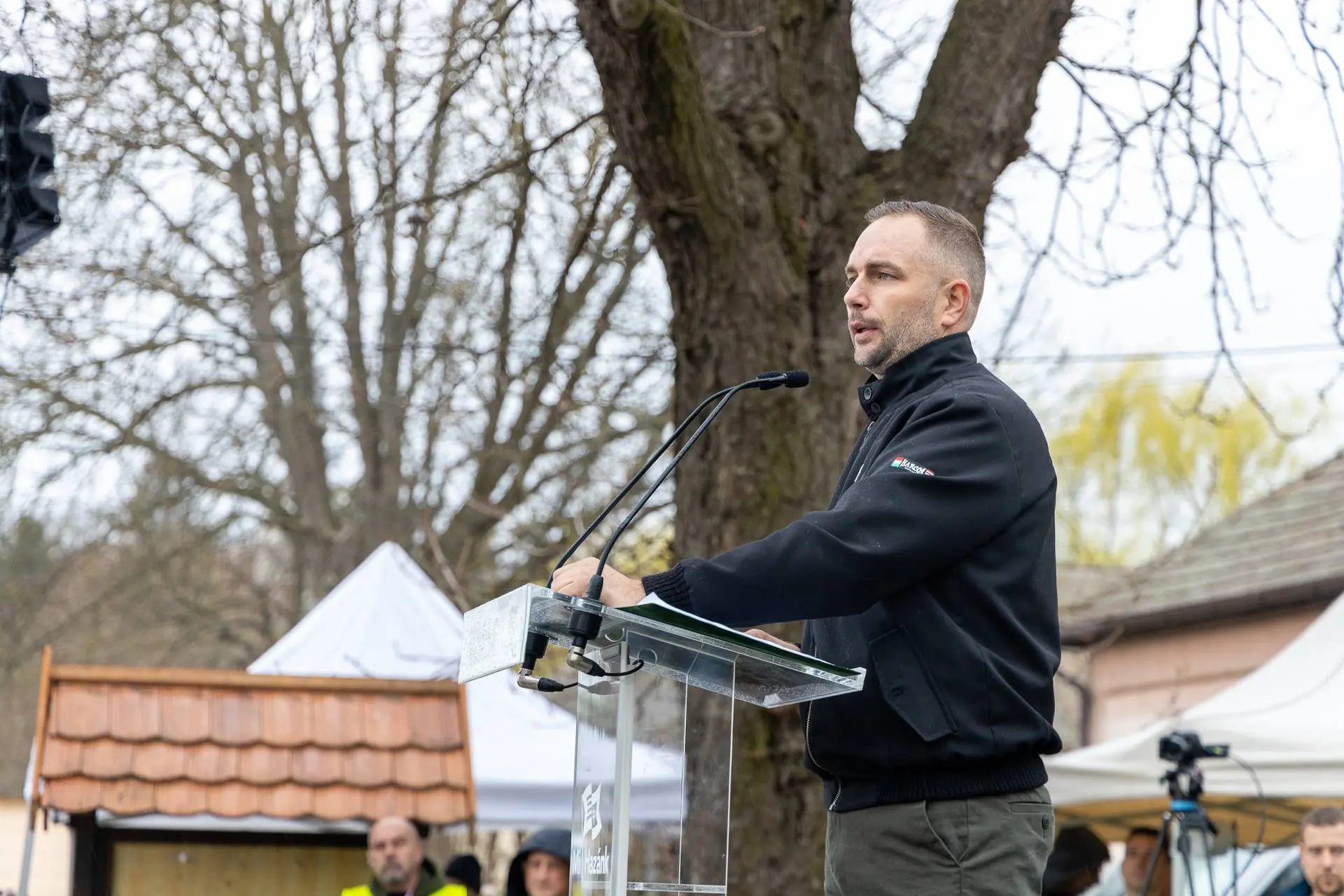
At the mayor's office, Mi Hazánk vice chairman Előd Novák opened the rally: “If the LGBTQ march can be held, then why not a march for law and order?”
He recalled parliamentary speaker László Kövér fining him five million forints for saying “cigánybűnözés” (Gypsy crime) in the National Assembly. The word, he argued, does not mean that all Gypsies are criminals, any more than “political criminality” means all politicians are. Fighting “political criminality,” he said, would first require abolishing parliamentary immunity. Mi Hazánk is the only party advocating for law and order.
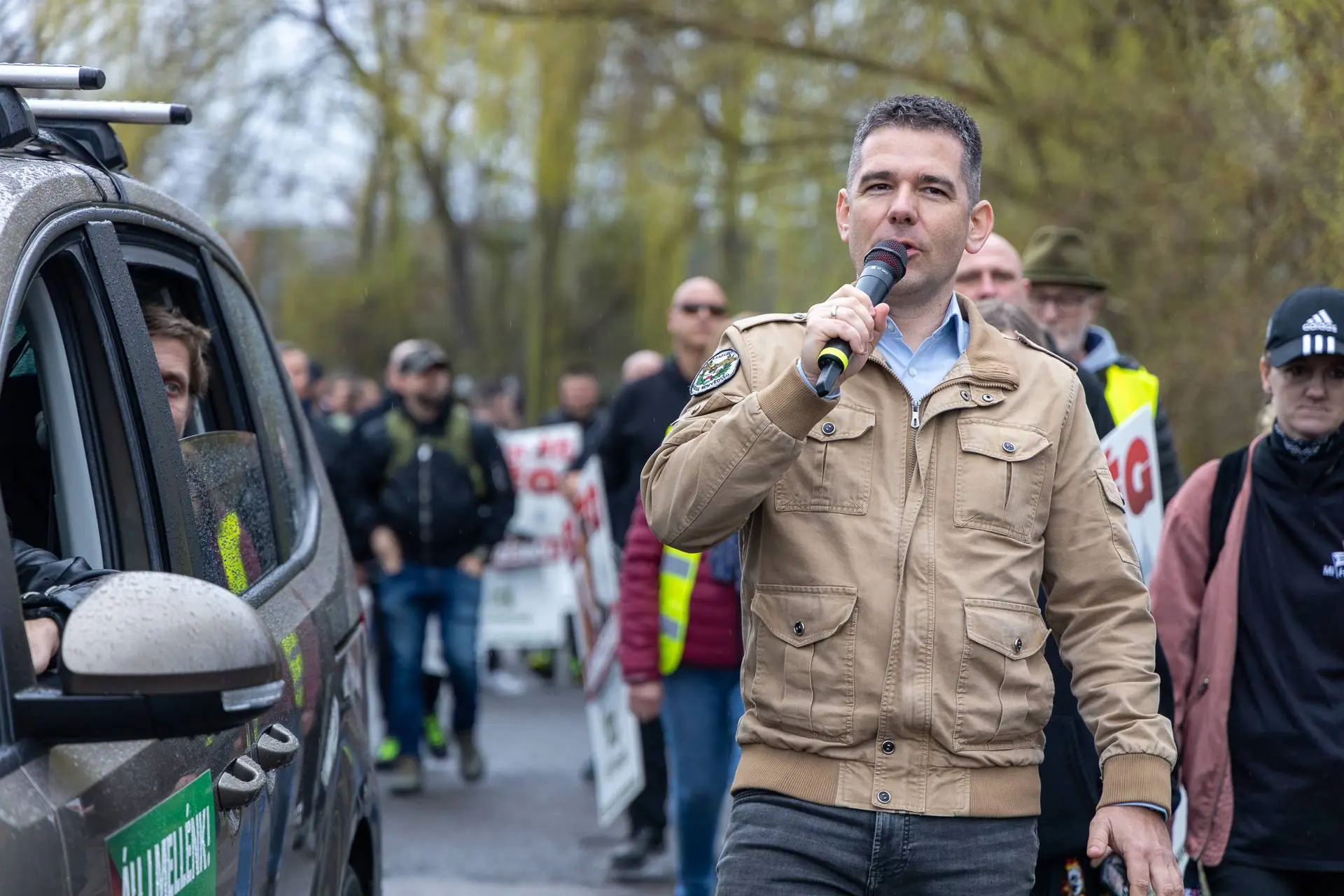
Gábor Barcsa-Turner, co-chairman of the allied Sixty-Four Counties Youth Movement, detailed arrests following the March 14 attack.
He also flagged one hundred children placed with foster families in the settlement, calling the placements money-making schemes. He described narcotics dogs finding drugs buried beside the grave of a young man who had been driving without a license when he was killed in a police chase. He revealed that Száva had recruited one of the most prominent aggressors from March 14 as a “local rights defender.” The individual was known for threatening people with an axe in online videos.
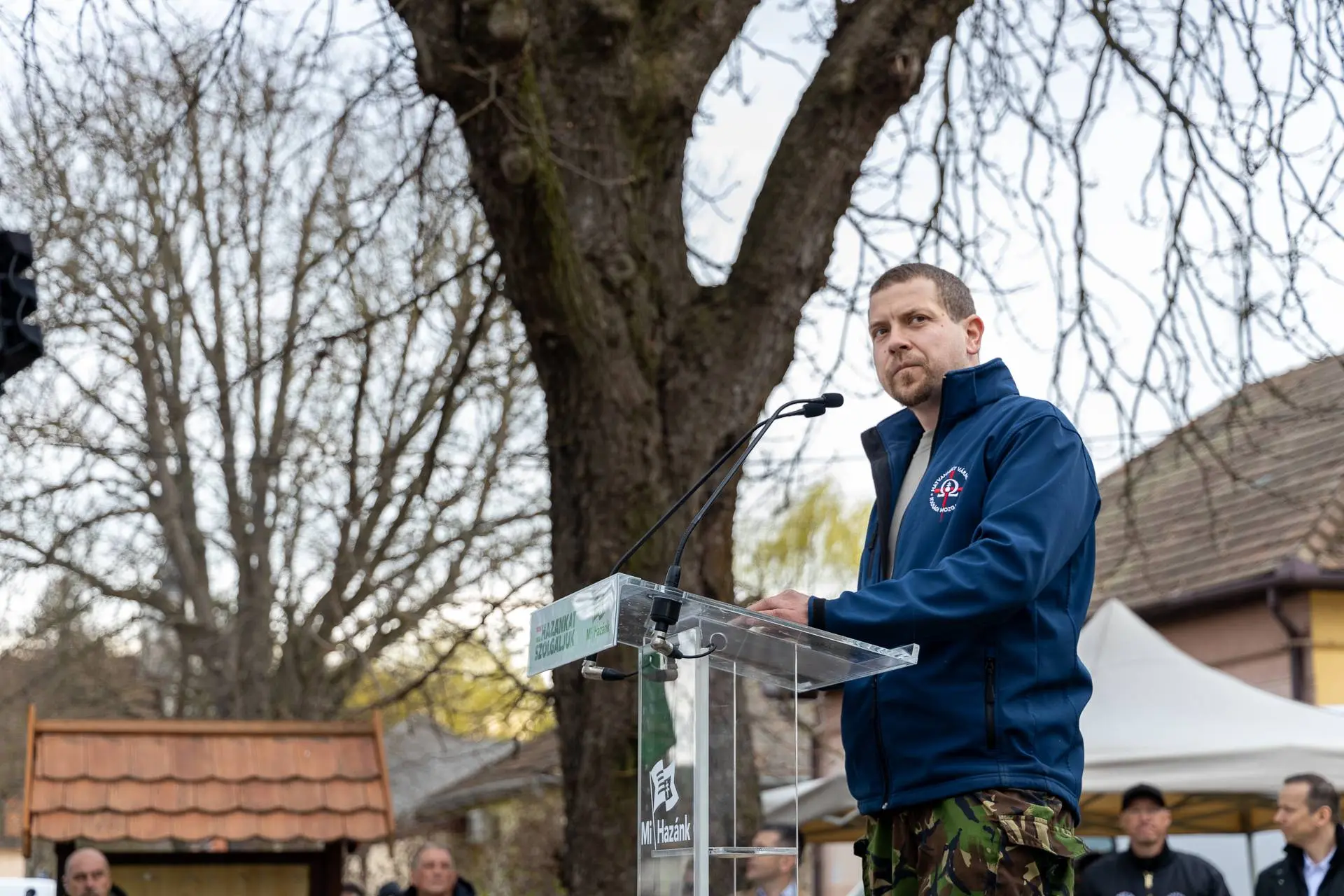
Dr. István Apáti, Mi Hazánk vice chairman and MP, called for at least doubling police starting pay, currently 250,000 to 300,000 forints (roughly $650 to $800 per month).
He called street crime and political corruption the same disease. “From Kálló to Parliament, order must be made,” he said, “because political criminality, which robs, cripples, and destroys our homeland, and the crime typical of segregated zones are like a malignant tumor, if discovered and removed in time, the chance of full recovery is nearly one hundred percent. If we allow it to spread, we will die from it.” He told Gypsies that those who obey the law, raise their children, and work have nothing to fear. The party would pursue criminals regardless of their ethnicity. Ethnicity would never be a mitigating circumstance.
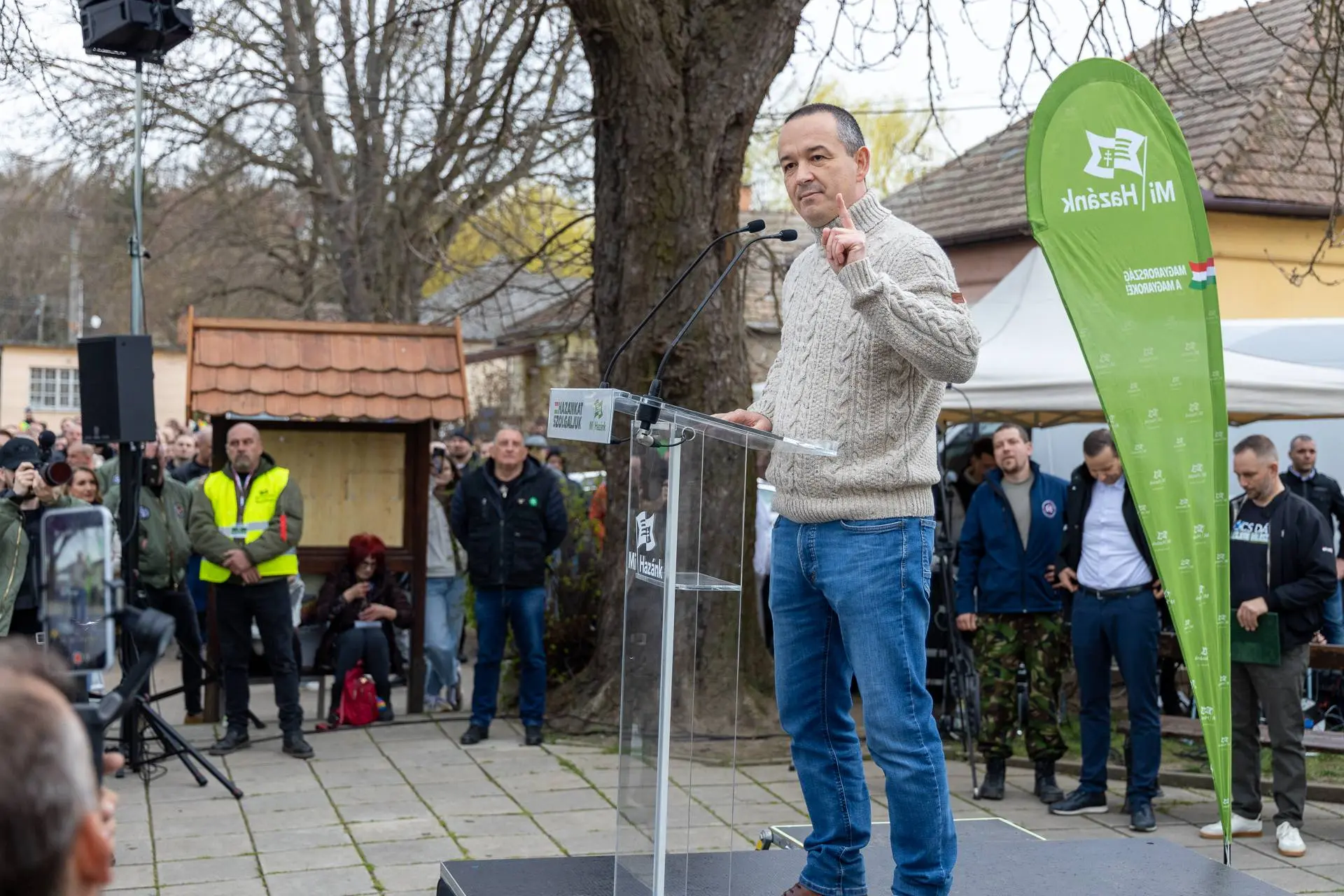
That argument had traction beyond the rally. On the podcast, Dócs said Gypsies across Hungary had written to the party condemning the attackers, saying the real line was between people who follow the law and people who do not.
Attila László, a Mi Hazánk mayor known for what he called the “Pilis model,” said his municipality went from a place people were leaving to one they wanted to move to within eighteen months.
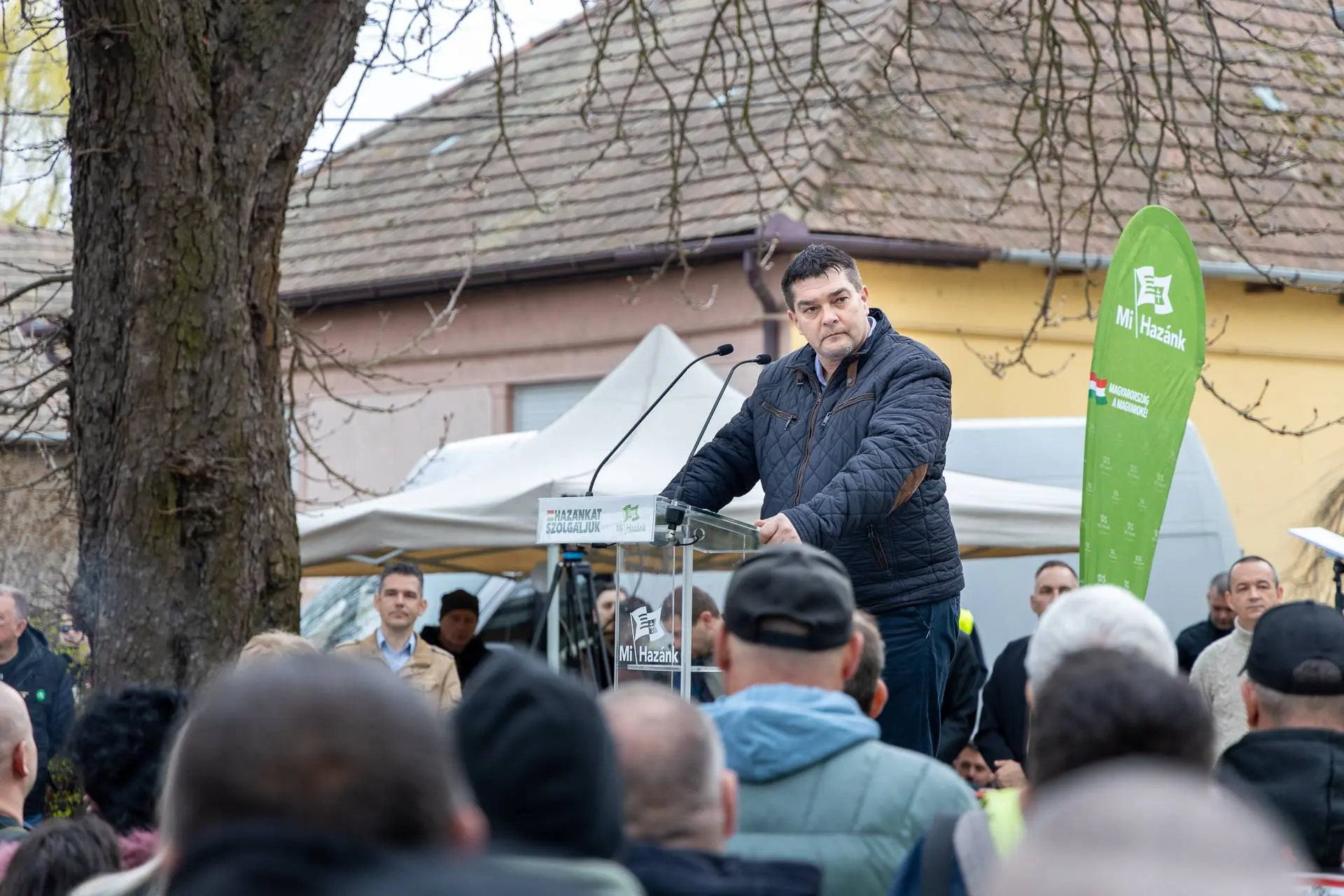
Dócs surveyed the crowd with a note of irony: “They say we are a five-percent party. But here is everyone, apparently, from that five percent.” He added: “This behavior does not belong in Kálló, not in Nógrád, not in Hungary, not in Europe, and not in the 21st century.”
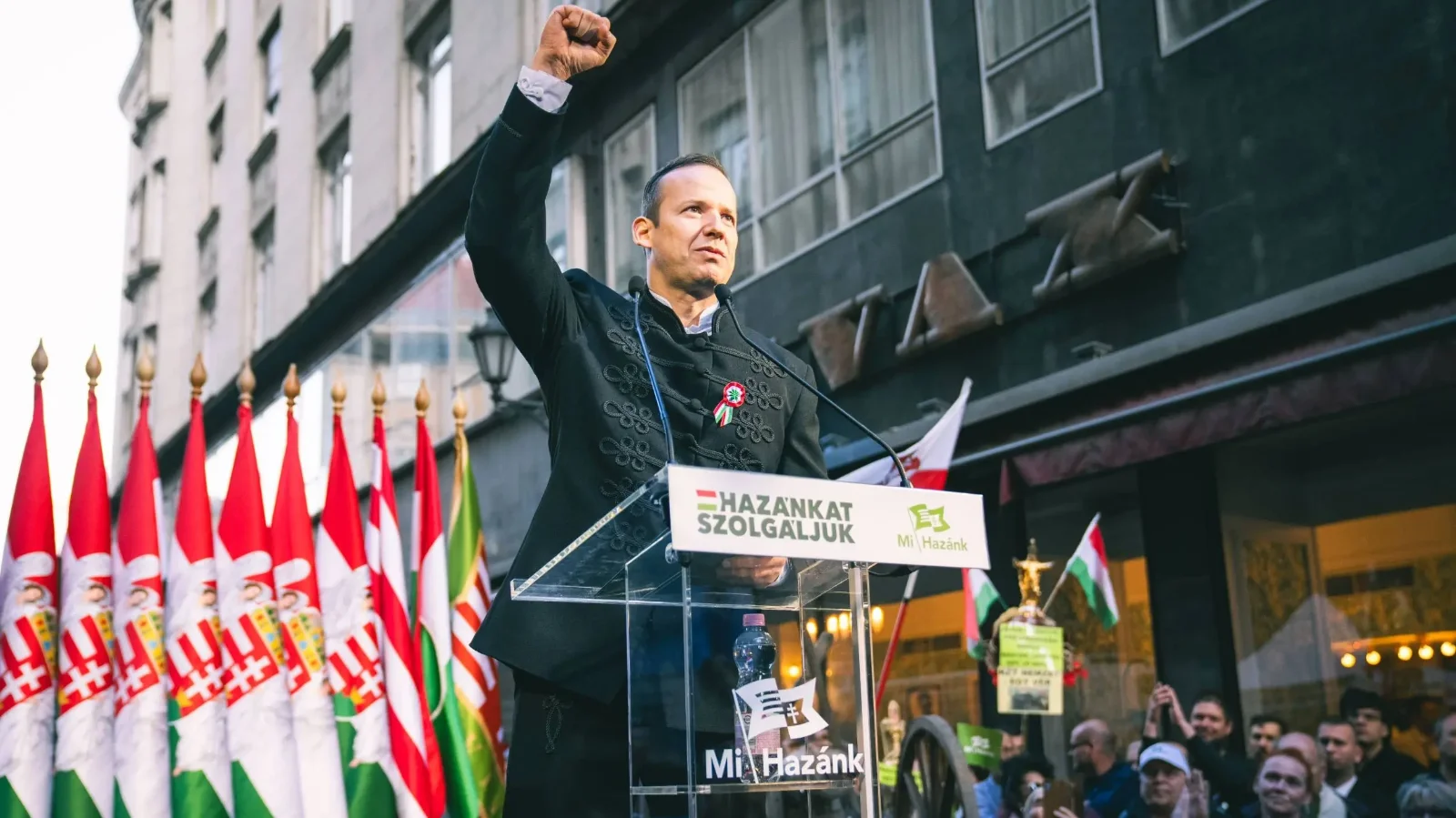
Then came party chairman László Toroczkai. He began with the founding motto, “Minden magyar felelős minden magyarért,” meaning every Hungarian is responsible for every Hungarian, and said that if one Hungarian is attacked, the whole movement shows up.
“We must send a message to these parasitic criminals, from petty thieves to samurai-sword, black-BMW gangsters, all the way to the white-collar criminals reaching into government. All of them must know it is over. Off to prison.” These criminals, he said, terrorize Hungarians, Gypsies, and Swabians (the Hungarian colloquial term for the German ethnic minority in Hungary) alike, every decent person in the country. The attackers, he noted, had admitted on camera they were lifelong criminals and intended to stay that way.
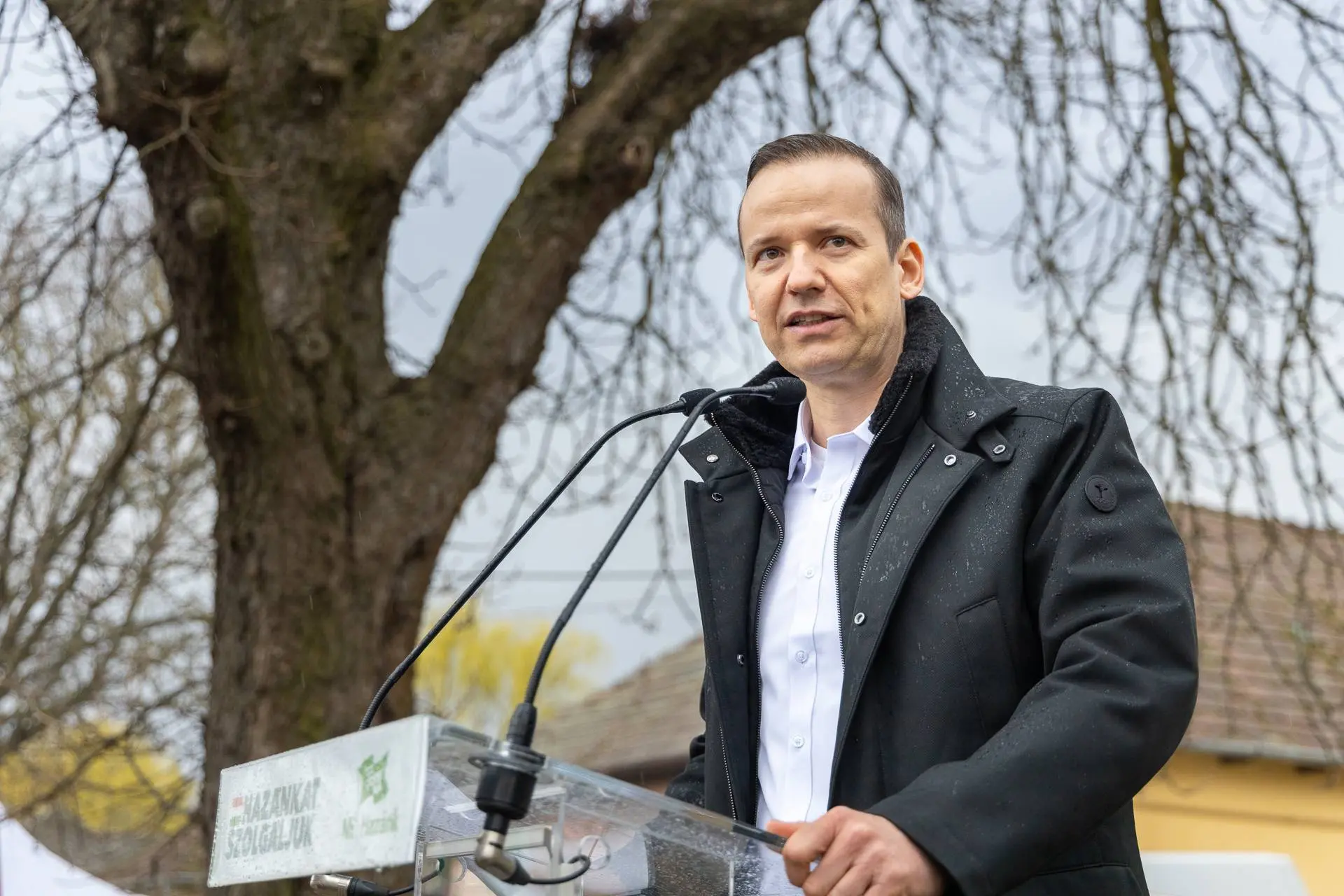
Toroczkai blamed the SZDSZ, the liberal Alliance of Free Democrats, for creating a 1990s culture in which criminals were the masters and their personal rights trumped public safety.
That mentality, he said, still governs Hungary. He also addressed Interior Minister Sándor Pintér. Sixteen years earlier, Pintér had promised order. Mi Hazánk stood in Kálló because he had failed. “In two weeks, we will retire Pintér and his people.” He alleged that State Secretary Attila Sztojka pressured police to ban the march.
He pledged to bring back former National Bank governor György Matolcsy and his clan from the UAE, along with billions of Hungarian forints he said they had stolen. He then turned to opposition politics, challenging Tisza Party leader Péter Magyar to publish a property sale contract involving Dániel Jellinek, one of Hungary's wealthiest businessmen and a reported business partner of István Tiborcz, Viktor Orbán's son-in-law. Toroczkai called Jellinek a “liquidator mafia” leader. If Magyar did not publish the contract, Toroczkai said he would release it himself. No government-aligned outlet covered the rally, despite Magyar's claim that Toroczkai had brought government media to Kálló.
He held up the deed to a house in Taktaszada, acquired during an earlier Bűnvadászok (Crime Hunters) operation, purchased from residents who had been driven to leave, with two million forints of his own salary and public donations. It will be the first Bűnvadászok headquarters. In addition, he said he would provide his caucus leader’s salary to secure a property in Kálló. “Anywhere they attack our activists, they will get the Bűnvadászok permanently.”
“Two weeks from now, Viktor Orbán and Péter Magyar will both be sweating. I promise that.” He added that if elected in April, his movement would enter the Interior Ministry and “restore order across the entire country.”
Sources:
Erdei Veronika, "Kállótól a Parlamentig rendet kell tenni! — Több ezren vettek részt a Mi Hazánk felvonulásán," Magyar Jelen, March 28, 2026.
"Majdnem lincselés lett a vége a lakossági fórumnak," Jelen Podcast (Magyar Jelen YouTube channel), featuring Dávid Dócs and Zoltán Kemenár, hosted by Sarolta Virághalmi.
Related:


Mi a munkánkkal háláljuk meg a megtisztelő figyelmüket és támogatásukat. A Magyarjelen.hu (Magyar Jelen) sem a kormánytól, sem a balliberális, nyíltan globalista ellenzéktől nem függ, ezért mindkét oldalról őszintén tud írni, hírt közölni, oknyomozni, igazságot feltárni.
Támogatás