Romanian Gendarmes Storm Hungarian Church During Mass to Evict Premonstratensian Abbot
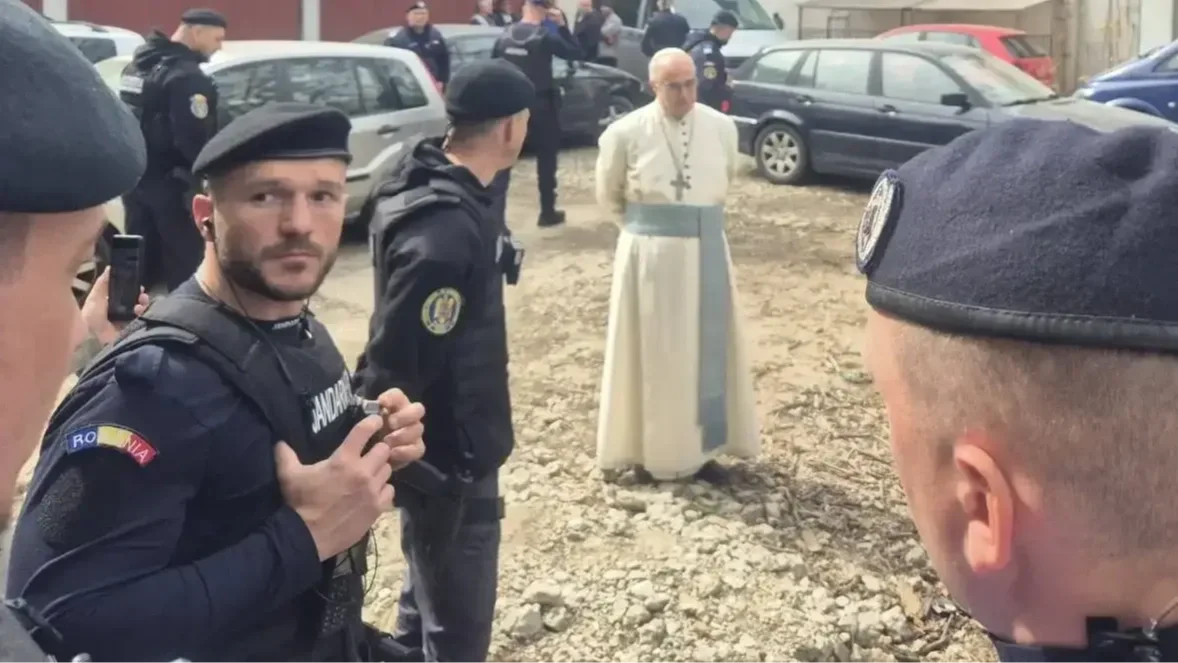 Romanian authorities prepare to evict Rudolf Anzelm Fejes, Premonstratensian abbot - Source: László Toroczkai/X
They came during Holy Communion.
On the morning of April 14, armed Romanian gendarmes and police entered the Church of Our Lady of Sorrows, the 18th-century Premonstratensian church in Nagyvárad (Oradea) to evict Rudolf Anzelm Fejes, abbot of the Premonstratensian community.
The Premonstratensians, a Catholic monastic order dating back to the 12th century, have worshipped on this site for over three hundred years. The officers eventually withdrew from the nave, but they returned after Mass ended. They broke through a rear gate and tried to force their way into the sacristy, the room beside the altar where vestments and liturgical items are kept. The abbot and parishioners blocked their path. The bailiff and the abbot’s side argued for hours inside the building, the bailiff waving the lower court ruling, the abbot’s supporters pointing to the pending appeal.
No EU member state had ever sent armed officers into a church during services to carry out an eviction under appeal.
A lower court had approved the city’s eviction order in late January, but the abbot appealed. The court ruled the eviction could be carried out despite the appeal, and Romanian authorities scheduled it for February 23. Several hundred worshippers gathered that day and stopped the eviction. The mayor’s office requested a temporary postponement, claiming the enforcement would have “directly affected educational activities.”
Father Fejes did not buy it. “They did not want to use force in front of so many people,” the abbot said. The bailiff set a new date for April 14, during Easter break, when no students would be in the adjacent school. Mayor Florin Birta had publicly stated that the eviction would go through the school building, not through the church. Yet the gendarmes entered the church during Mass.
The Premonstratensian Order once owned the entire building complex, parts of which were seized during the communist era and have remained in dispute since.
Its former secondary school now operates as the Mihai Eminescu High School, named after Romania’s national poet. A renovation planned for years and announced to begin in summer is backed by roughly €20 million in EU funding awarded to the city government.
The project, the abbot says, threatens a parish that serves Nagyvárad’s Hungarian Catholics. The order has spent years in court over the buildings. Parts of the complex were seized during the communist era, though the monks themselves were never expelled from the premises until now. The authorities took the school. A parking garage was built on part of the church garden, and during that construction, the 18th-century church wall cracked along its length. Now they were coming for the rooms belonging to the church itself.
Two days after Hungary’s parliamentary elections, neither the outgoing Viktor Orbán government nor the incoming administration sent representatives to Nagyvárad.
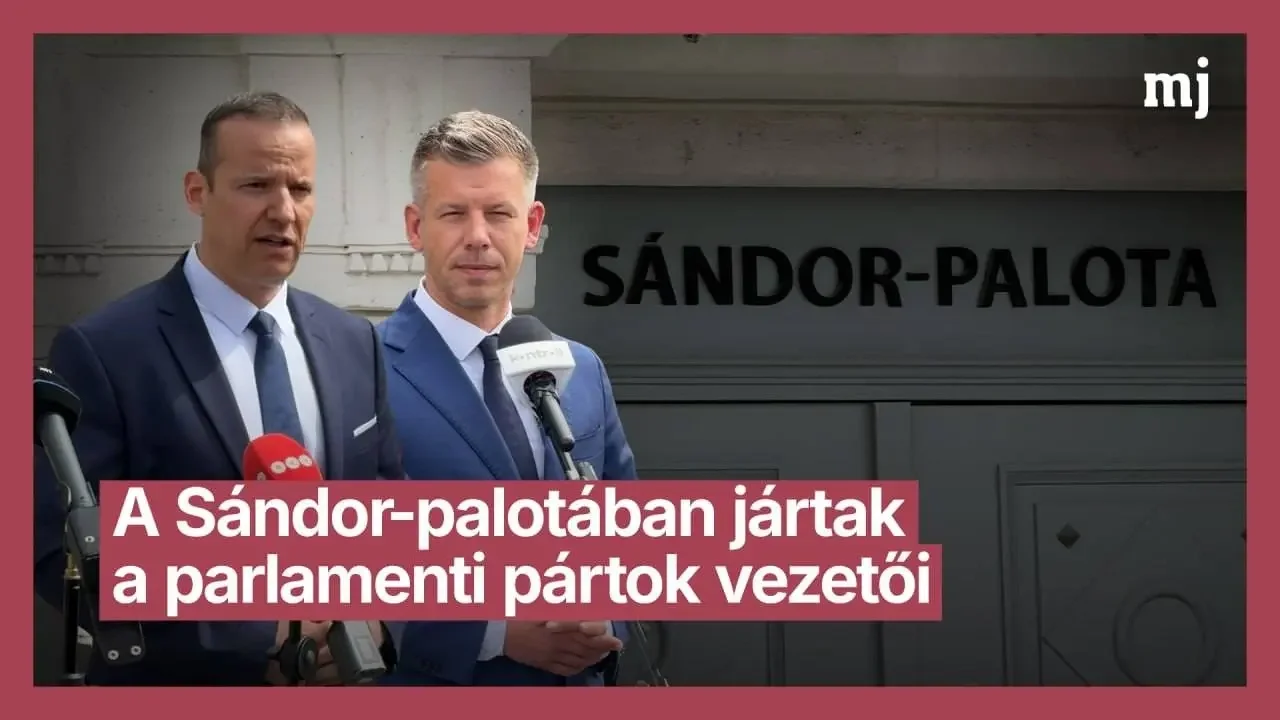
Mi Hazánk Mozgalom (Our Homeland Movement), a nationally oriented conservative Hungarian party, had sent Szilveszter Kispalkó to stand with the parishioners in February. Kispalkó heads the party’s National Policy Cabinet. On April 14, the party’s president, László Toroczkai, was inside the sacristy.
Toroczkai posted an account on X. Nearly one hundred gendarmes and police, he wrote, deployed against a small congregation.

“I never thought I would live to see armed Romanian gendarmerie and police break into a Catholic church during a Hungarian-language Mass.”
The abbot had not eaten or drunk anything all day. Officers inventoried the contents of the sacristy. “They even catalogued the vestments.” Romanian law, he pointed out, prohibits state officers from entering a church. One protester was detained by police, allegedly for speaking disrespectfully to the authorities.
“If they can do this to a Hungarian Catholic church here and now, they can do it anywhere in the future.”
László Tőkés stood alongside them. The former Reformed bishop of Transylvania had resisted the Ceaușescu regime in 1989, and his resistance triggered the Romanian revolution. Toroczkai was eleven years old when he watched Tőkés defy Ceaușescu. He wrote that it remained the defining political experience of his childhood. Thirty-seven years later, there was Tőkés at 74, in the front line, facing down armed security forces alongside the abbot. “I was ready to defend Father Fejes and the abandoned faithful even with my own body.”
Toroczkai described standing beside Tőkés as fighting “against the attack of godless power.” “In our age there are many false prophets and false heroes,” he wrote. “Tőkés László is one of the real ones.”
The silence, Toroczkai said, went back to the project’s origins. The same man who launched the renovation as Nagyvárad’s mayor now serves as Romania’s prime minister, and this, Toroczkai argued, meant the project had the prime minister’s personal protection.
Neither the Democratic Alliance of Hungarians in Romania (RMDSZ/UDMR), the country’s ethnic Hungarian party, nor the Orbán government stood up for the abbot.
Zsuzsanna Borvendég, a Mi Hazánk member of the European Parliament, petitioned the European Commission
“to investigate the legality of the ongoing eviction proceedings against the head of the Premonstratensian Abbey, as well as the EU financing of the renovation.”
She told Brussels to pull the European funds and stop the construction.
Standing outside the abbey, Toroczkai spoke to his audience on camera. The municipality, he said, had already seized parts of the complex using what he called methods that violated the law.
Péter Magyar, leader of the Tisza party and Hungary’s incoming prime minister, had come to Nagyvárad to campaign but was not there in February and was not there on April 14.
The Hungarian president had invited the leaders of all three parliamentary parties to his office. Toroczkai said he would confront the incoming prime minister publicly and demand he speak to his Romanian counterpart, stop the eviction, and halt the seizure of the church’s rooms. He would also call on the outgoing government to summon the Romanian ambassador and take action.
“This madness,” Toroczkai said at three that afternoon, “had finally ended.”
Bailiffs and officers had entered the complex and inventoried what they found. The abbot’s case before the Nagyvárad Court of Appeals has not been decided. A small community of Hungarian Catholic worshippers, led by the abbot, refused to leave the sacristy.
Sources:
Magyar Jelen – "Szentmise közben törtek be a román csendőrök, hogy kilakoltassák a nagyváradi magyar premontrei apátot" (Erdei Veronika, April 14, 2026)
Magyar Jelen – "A románok új időpontot tűztek ki a nagyváradi magyar főapát kilakoltatására" (Remenyiczki Éva, April 9, 2026)
Magyar Jelen – "Toroczkai László akár a testével is védte volna a nagyváradi premontrei apátot és a híveket" (Remenyiczki Éva, April 14, 2026)
Magyar Jelen – "A premontrei apát melletti kiállás után Toroczkai László élőben számolt be a fejleményekről" (Remenyiczki Éva, April 14, 2026)


Mi a munkánkkal háláljuk meg a megtisztelő figyelmüket és támogatásukat. A Magyarjelen.hu (Magyar Jelen) sem a kormánytól, sem a balliberális, nyíltan globalista ellenzéktől nem függ, ezért mindkét oldalról őszintén tud írni, hírt közölni, oknyomozni, igazságot feltárni.
Támogatás